


– From drone detection to smart homes and private security, collaboration inquiries surge around acoustic technology

[Las Vegas, USA = AVING News] Throughout CES 2026, LINSOL’s booth drew a steady stream of buyers focused not on screens, but on sound. By presenting an acoustic-based threat detection approach—rather than conventional camera- and radar-centric drone detection—LINSOL positioned itself as a compelling alternative in the global security landscape.
LINSOL, which originated as the first in-house venture of Hanwha Aerospace, won a CES 2026 Innovation Award with its acoustic-based aerial security solution, ‘Acoustic Eye.’ Global buyers visiting the booth noted that while they initially expected a camera-based drone detection system, the use of sound as the primary sensing modality represented an entirely different and innovative approach.
“More Interest in Acoustic Technology Than Drones”… Collaboration Inquiries Increase
According to on-site interviews, many visitors came seeking solutions for illegal drone detection, but a significant number were drawn specifically to LINSOL’s acoustic signal processing technology itself. Representatives from technology companies in France, China, and other countries inquired about potential collaborations combining their own acoustic technologies with LINSOL’s AI-based sound analysis and separation capabilities.
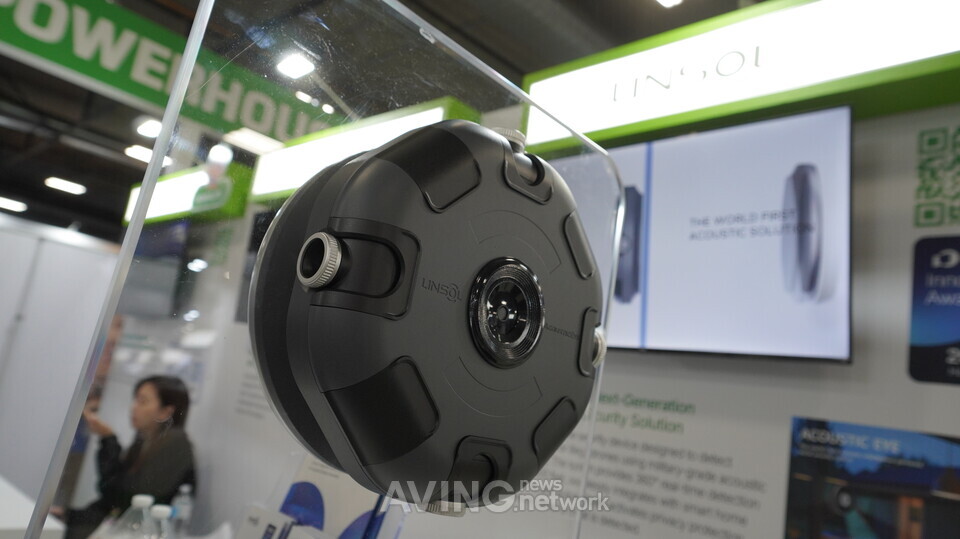
Against the backdrop of a growing consensus that traditional camera- and radar-based systems struggle to detect small drones and low-altitude aerial objects, LINSOL’s non-vision acoustic detection approach was increasingly recognized as a viable alternative.
While LINSOL’s technology originated in smart home and smart city applications, its potential use cases are rapidly expanding. At CES 2026, discussions extended beyond residential environments to include celebrity villas, ultra-high-end private residences, and standalone buildings requiring extreme levels of security. In environments where minimizing external exposure is critical, acoustic-based detection—operating without cameras and without line-of-sight limitations—was highlighted as a privacy-conscious security solution.
Interest was particularly strong among operators of high-risk, high-security facilities, as Acoustic Eye can detect and localize small drones and low-altitude flying objects using sound alone—capabilities that are difficult to achieve with radar or visual systems. LINSOL plans to further advance its technology to address growing demand for fully non-vision-based private security infrastructure.
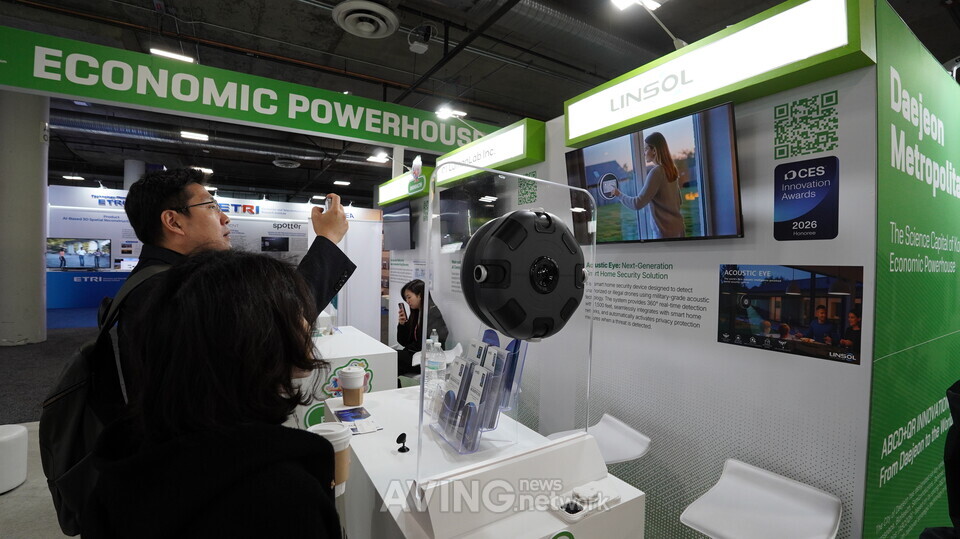
“Acoustic Technology as Independent Infrastructure, Not a Supporting Tool”
A LINSOL representative commented, “One of the strongest reactions we observed at CES 2026 was not only concern over illegal drones, but a deeper interest in how acoustic technology itself is handled and applied. Many companies possess acoustic technologies, but there are still very few cases where AI is used to separate, amplify, and track sound in a way that results in a practical safety solution.”
The representative added, “Through Acoustic Eye, we confirmed at CES that acoustic technology can function not as a supplementary monitoring tool, but as an independent safety infrastructure. This CES participation marked a turning point—not just as an extension of military acoustic technology into civilian use, but as the starting point for global collaboration in acoustic AI.”
Min Choi Reporter zap@aving.net